The Wounds Beneath the Surface
Some wounds are easy to name.
A loss. A betrayal. An abusive relationship. A painful childhood memory. Other wounds are harder to recognize.
Maybe they do not seem serious enough, or they may have happened a long time ago. Maybe you believe other people may have experienced “so much worse”. You may still love or be in relationship with the person who hurt you. You may believe that because you forgave, prayed, moved forward, or continued on, the pain should no longer affect you.
So you minimize it. You tell yourself it was not that bad. You say you are over it. You explain away what happened. You stay busy enough not to feel it. You become the person who takes care of everyone else, so no one notices how much you are carrying.
We Confuse Avoidance With Strength
Avoidance does not always look like running away. Sometimes it looks like being highly functional. You keep working, you care for your family, you show up at church and serve, you encourage other people, you quote Scripture, and you remain productive and dependable. From the outside, it may appear that you are doing well. But inside, certain memories still carry shame. Certain conversations make your body tense. Certain relationships trigger reactions that feel bigger than the moment. You may become defensive, shut down, overexplain, people-please, control, withdraw, or feel responsible for everyone around you.
You may not consciously think about the original wound anymore, but your nervous system may still be organizing your life around it. The wound you avoid can still influence how you see yourself, what you tolerate, how you relate to others, and what you believe about God.
“It Wasn’t That Bad”
Minimizing is often a form of protection. If you admit that something deeply affected you, you may also have to acknowledge that someone failed you, that you were not protected, or that a relationship was not what you needed it to be. You may have to feel grief, anger, disappointment, or helplessness.
For many people, that feels threatening. It may feel safer to say, “They did the best they could,” than to acknowledge that their best still hurt you. It may feel more spiritual to say, “I have forgiven them,” than to admit that part of you still feels unsafe and hurt. It may feel more compassionate to understand everyone else’s behavior than to make room for your own experience.
Understanding why someone hurt you does not erase the impact of what happened. Forgiveness does not require denial, and compassion does not require self-abandonment. Healing does not begin by convincing yourself that your pain is insignificant.
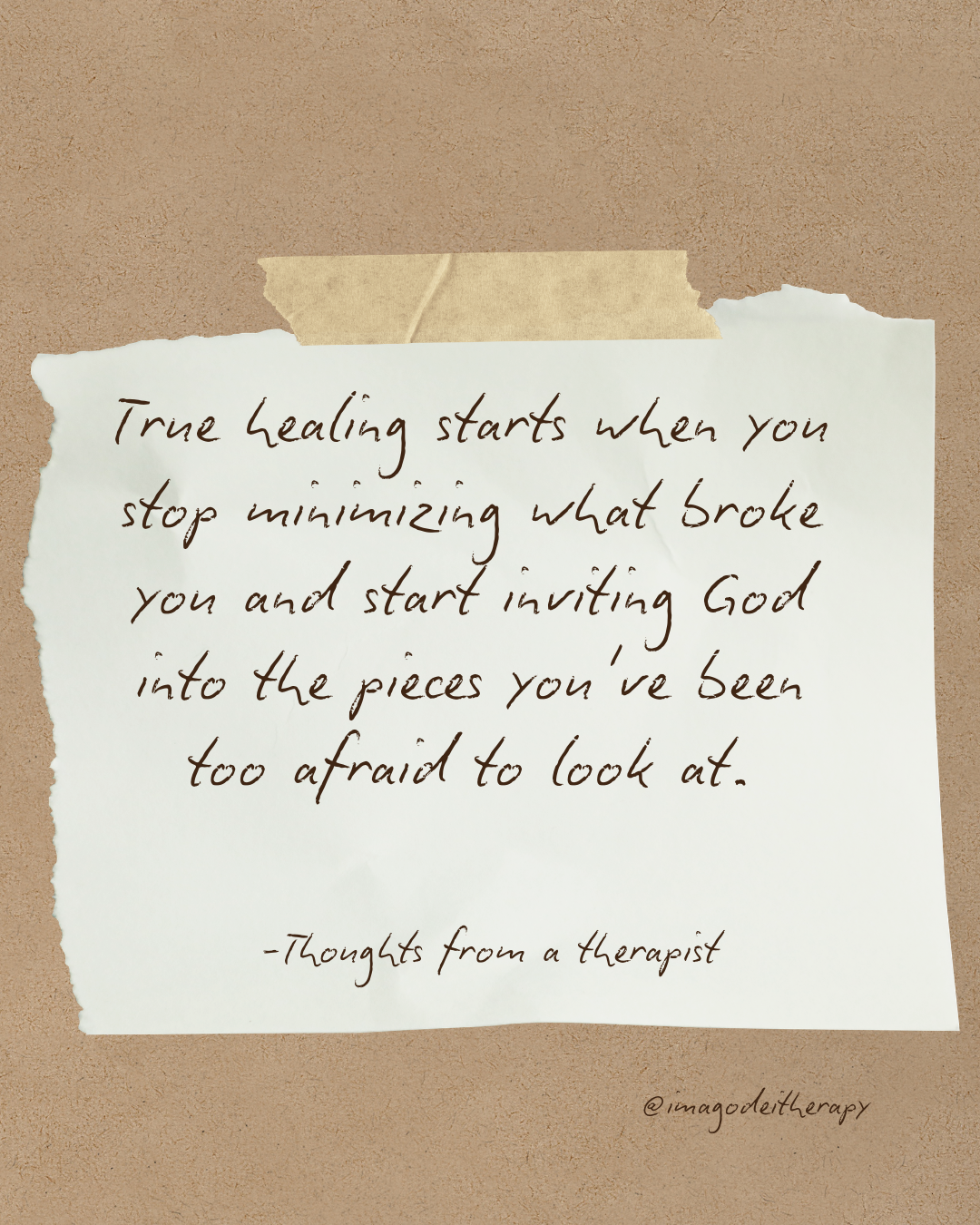
Healing starts when you stop minimizing what broke you and start inviting God into the pieces you've been too scared to look at.
Why We Keep Certain Parts Hidden From God
You may believe that you have invited God into your pain because you have prayed about it, but sometimes our prayers remain at the surface. We ask God to help us move on, but not to show us what we are still carrying and what wounds are beneath the surface. We ask Him to remove anxiety, but avoid exploring what taught our nervous system to feel unsafe. We ask Him to improve our relationships, but resist looking at the patterns we learned in childhood from our caregivers. We ask for peace, while staying disconnected from grief, anger, fear, or shame.
Some parts of us may believe that certain emotions are unacceptable to God.
You may be afraid that anger makes you disrespectful, grief makes you ungrateful, questions make you faithless, or boundaries make you unloving. So you bring God the version of your pain that feels safe, but the unfiltered parts remain hidden. The confused part. The angry part. The ashamed part. The part that still does not understand why God “allowed it”. The part that prayed and did not receive the answer it wanted. The part that is afraid healing will require facing something it has spent years avoiding. God is not threatened by those parts. He already knows they are there and wants us to welcome Him into them.
A Parts Perspective on Avoided Wounds
Internal Family Systems, also called IFS, understands that we all have different parts within us. These parts develop roles to help us manage pain and remain safe.
One part may keep you busy so you do not have time to feel. Another may tell you to stop being dramatic. Another may encourage you to forgive quickly so the conflict can end. Another may become highly independent because depending on people once led to disappointment. Another may seek control because uncertainty feels dangerous. Another may remain emotionally numb because feeling everything at once would be overwhelming.
These parts are not evidence that you are broken. They are evidence that your system has adapted. The part that says, “Do not go there,” may believe it is protecting you from being consumed by pain. The part that minimizes may be afraid that if you acknowledge the truth, your relationships, faith, identity, or sense of stability will fall apart.
Rather than fighting these parts, healing begins with curiosity.
What are you afraid would happen if I looked at this part of me? What are you protecting me from? When did you learn that my feelings were dangerous? What do you believe God thinks about this part of me? What would you need in order to feel safe enough to let me come closer?
The goal is not to force open every wound. It is to create enough safety that the protective parts no longer have to carry everything alone.
Core Beliefs Formed in Pain
Wounds not only leave memories, but they can also leave core negative beliefs.
If you were repeatedly criticized, you may grow up believing, “I am never enough.” If you were abandoned, you may carry the belief that “People always leave.” If you have always had to care for everyone else, you may believe, “My needs are a burden.” If your emotions were dismissed growing up may believe, “I am too sensitive.” If you experienced betrayal, you may believe, “I cannot trust anyone.”
These beliefs often operate beneath the surface. You may not say them out loud, you may not recognize or identify them, but they can shape your reactions, choices, relationships, and faith.
You may overwork because rest brings up feelings of worthlessness. You may avoid closeness because vulnerability feels dangerous. You may stay in unhealthy situations because part of you believes love must be earned through suffering. You may struggle to receive care because being needed feels safer than needing others. You may know what Scripture says about your worth while still carrying a nervous system that expects rejection.
This does not mean your faith is weak. It means some wounds require more than intellectual truth. They need to be experienced, grieved, processed, and met with compassion.
What Healing Can Look Like
Healing does not mean that you will never feel triggered again. It does not mean forgetting what happened, excusing harmful behavior, or reconciling with people who remain unsafe. Healing may look like recognizing that your present reaction belongs partly to an older wound. It may look like allowing yourself to feel sadness without calling yourself weak. It may mean grieving the childhood, relationship, opportunity, safety, or version of yourself you lost. It may mean allowing anger to reveal where something important was violated. It may mean replacing shame with compassion.
Healing often happens gradually. One honest prayer, one memory named, one protective part understood, one old belief questioned, or one moment of allowing yourself to be seen without minimizing what happened.
There Is Nothing Wrong With You for Still Being Affected
The part of you that avoids, minimizes, controls, shuts down, overfunctions, or stays constantly busy may still believe it is keeping you safe. Healing is not about shaming that part. It is about helping it discover that it no longer has to protect you alone.
At Imago Dei Therapy, we help clients understand the wounds beneath their current patterns, including anxiety, people-pleasing, emotional shutdown, perfectionism, difficulty trusting, overresponsibility, shame, and fear of vulnerability.
Through trauma-informed therapy, attachment work, EMDR, and IFS-informed approaches, we help clients gently explore the experiences and core beliefs that may still be shaping their lives.
Faith integration is always approached with care and at the client’s comfort level. Therapy can provide a space to bring God into the parts of your story that have felt too painful, confusing, or shameful to face alone.
